
The last words of julius caesar: uncovering historical significance
Apr
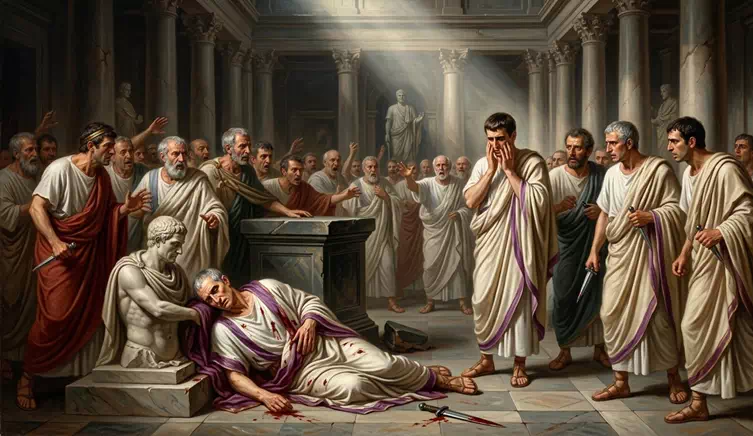
Few deaths in history have generated as much speculation as that of Julius Caesar. On the Ides of March, 44 BCE, as senators’ blades fell inside the Roman Senate chamber, Caesar’s final words, if he spoke at all, were lost in chaos, shock, and the competing agendas of those who later wrote about them. Ancient sources disagree, historians debate, and Shakespeare famously filled the silence with a line that has outlasted nearly every scholarly argument. What Caesar actually said in those last moments may never be known with certainty, but the question itself reveals something far more interesting: how history is made, reshaped, and remembered.
What are the famous last words of Julius Caesar?
The Most Common Accounts of Caesar’s Last Words
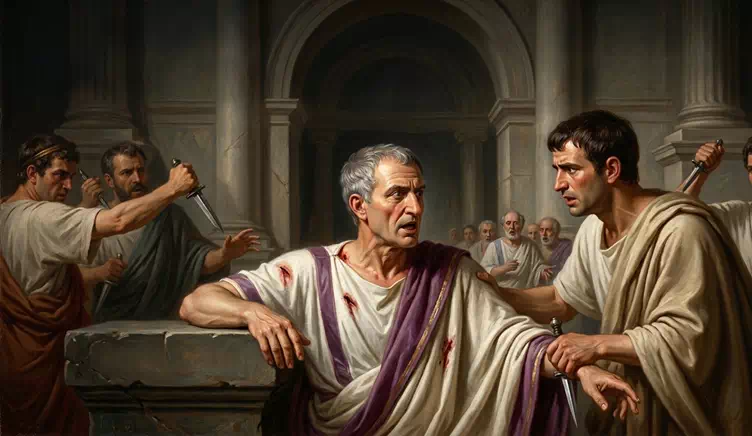
The phrase most often associated with Caesar’s final breath is “Et tu, Brute?”, Latin for “You too, Brutus?“, immortalized by Shakespeare. However, ancient Roman historians recorded very different versions. Suetonius mentions that Caesar may have addressed Brutus in Greek with “Kai su, teknon?”, meaning “You too, my child?”, while both Suetonius and Cassius Dio suggest he may simply have fallen silent, covering his face with his toga. This moment is often interpreted as a symbol of ultimate betrayal, given how close Brutus was among Caesar’s confidants.
Historical Context Surrounding His Final Moments
Caesar’s assassination unfolded rapidly inside the Senate chamber, surrounded by trusted allies who became his murderers. As the senators struck, Plutarch describes how Caesar initially resisted but relented upon seeing Brutus among the attackers. The mixture of shock, resignation, and personal heartbreak shaped the enigmatic nature of his purported last words. Roman accounts often emphasized drama or moral lessons to serve political agendas, which affects our understanding today.
Discrepancies in Historical Sources
The truth is, we may never know with certainty what Caesar actually said in his final moments. Ancient sources differ significantly: Suetonius reports both the possibility of silence and a Greek phrase addressed to Brutus, while Cassius Dio similarly suggests Caesar died without speaking. These discrepancies likely result from oral traditions and the authors’ political or narrative intentions, making the exact phrase a subject of ongoing debate among historians worldwide.
The Impact of Shakespeare on Caesar’s Last Words
“Et tu, Brute?”, Origin and Misattribution
The phrase “Et tu, Brute?” originates from Shakespeare’s play Julius Caesar, not from ancient Roman sources. Shakespeare’s adaptation blurred the line between drama and history, capturing the shock of betrayal in a phrase that would echo down through the centuries, shaping popular imagination far more than any textual evidence from antiquity.
The Role of Literature in Shaping Historical Narratives
Literature often fills gaps where historical evidence is uncertain. Writers like Shakespeare take creative liberties with historical events, humanizing legendary figures and making them unforgettable. By doing so, they create a shared cultural memory, even if it bends factual accuracy. In the case of Caesar, his last words have become a symbol not only of personal betrayal, but also of political downfall.
How Shakespeare’s Interpretation Influenced Public Perception
The line “Et tu, Brute?” is now inseparable from Caesar’s story in classrooms, theaters, and popular culture. Shakespeare’s depiction colored the way societies interpret the events of March 15th, 44 BCE. For many, these words carry a weight of emotional resonance that often surpasses scholarly analysis or documented ancient sources.
Last Words in the Context of Roman Politics
The Meaning of Caesar’s Words Within the Senate
Within the Senate, Caesar’s supposed words, whether in Latin or Greek, would have been a direct challenge to the legitimacy and loyalty of his peers. Addressing Brutus so personally heightened the tragedy, transforming a political coup into a story of shattered trust. It also raised uncomfortable questions about power, allegiance, and friendship in the ancient Roman elite.
How His Death Changed the Course of Roman History
Caesar’s assassination plunged Rome into years of civil war, ultimately setting the stage for the rise of the Roman Empire. His last words, whether historical or dramatized, symbolized the failure of republican ideals and fueled debates about leadership and authority for generations to come.
Legacy of Caesar’s Assassination in Modern Politics
Throughout history, Caesar’s final moments have inspired political discourse and cautionary tales worldwide. Modern leaders and thinkers often invoke the metaphor of betrayal from within as a warning against unchecked ambition or misplaced trust.
Exploring the Historical Significance of Caesar’s Final Words
Beyond mere curiosity, the search for Caesar’s true last words reveals how history is shaped by perspectives, storytelling, and cultural transmission. Whether whispered in Greek to a trusted friend or left entirely unspoken, these words encapsulate the tension between myth and reality. These variations likely arose because later writers introduced interpretation or dramatization, a reminder that meaning is shaped not only by facts, but also by the stories we choose to remember.
Frequently Asked Questions About Julius Caesar’s Last Words
What did Julius Caesar actually say before his death?
According to ancient sources, there is no consensus. Suetonius mentions the possibility of a Greek phrase addressed to Brutus, “Kai su, teknon?”, meaning “You too, my child?”, while both Suetonius and Cassius Dio suggest he may have died in silence. Shakespeare’s famous “Et tu, Brute?” added a dramatic flourish but has no basis in ancient sources.
How do historical accounts of Caesar’s last words differ?
Roman historians recorded different possibilities: some pointed to silence, others to a brief phrase in Greek directed at Brutus. These variations likely arose because later writers added interpretation or drama, influenced by oral traditions and the political agendas of their times.
Why are Caesar’s last words significant in history?
These words represent the shock of ultimate betrayal, crystallizing the end of the Roman Republic and changing world history. They stand as a symbol of personal and political downfall, offering insight into both the emotions of the event and the broader consequences for European civilization.
Did Julius Caesar speak in Greek or Latin when he died?
Suetonius mentions a Greek phrase, “Kai su, teknon?”, but there is no definitive evidence. Greek was common among educated Romans, especially in elite circles like the Senate, making it plausible he chose those words in the heat of the moment.
How has popular culture depicted Caesar’s last moments?
Shakespeare’s play made “Et tu, Brute?” globally famous, inspiring countless works of literature, theater, and film. These reinterpretations have shaped collective memory, often prioritizing dramatic impact over strict historical accuracy, keeping the story vivid for audiences across centuries.


ClassicWorldCoins was created by a passionate collector with a deep interest in ancient coins and their stories. Through this blog, he shares his discoveries, insights, and favorite pieces to help others explore the fascinating world of numismatics.