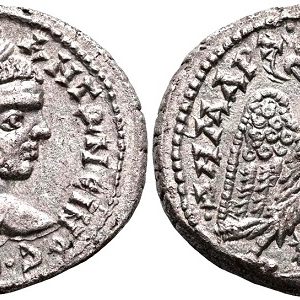
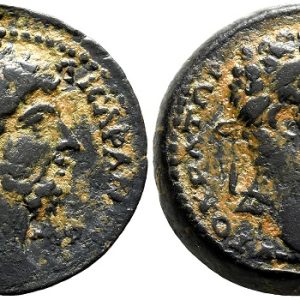
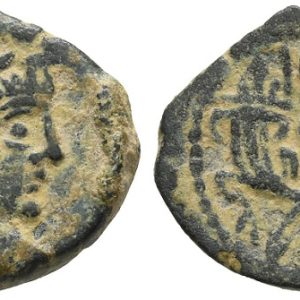
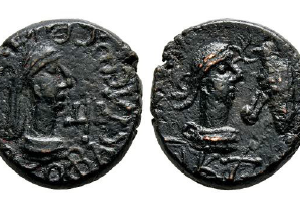
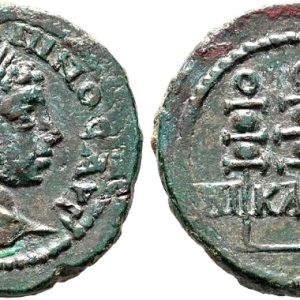
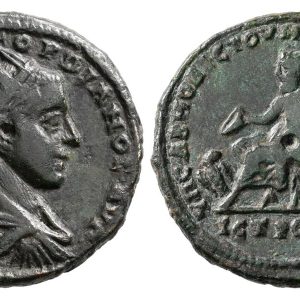
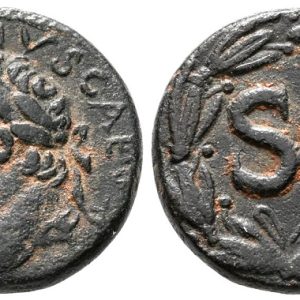
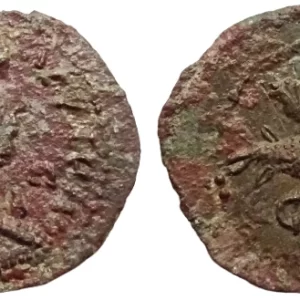
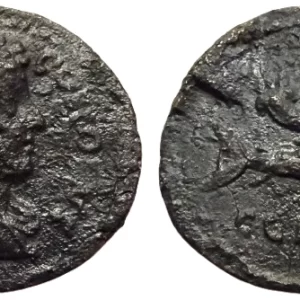
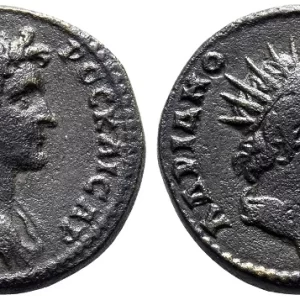
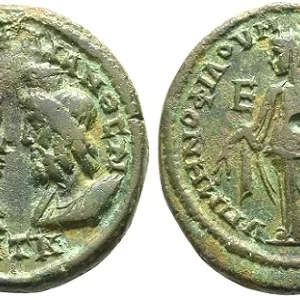
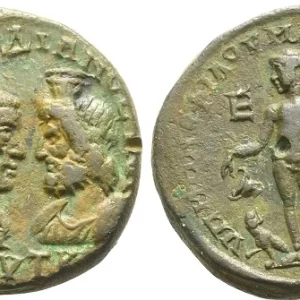
a large selection of bronze and silver roman provincial coins to sell : silver tetradrachms, bronze coins from Apameia, Antioch, Pergamum, Cyzicus, Ephesus
Un large choix de monnaies républicaines romaines en bronze et argent à vendre.
Roman Provincial Coins for Sale
Roman provincial coins occupy a unique space in ancient numismatics. They were not struck at the central Roman mints in Rome or Antioch, but by individual Greek cities operating under Roman authority, each issuing coins according to local traditions, local denominations, and local artistic conventions. The result is a category of extraordinary diversity, where Roman imperial portraits appear alongside images of regional deities, civic temples, mythological creatures, and symbols that have no equivalent in standard imperial coinage. For a collector who already knows Roman denarii, provincial coins open an entirely different world.
What Roman provincial coins are
Provincial coinage developed from the existing Greek civic minting tradition, when Rome extended its control across Asia Minor, Syria, Thrace, and the eastern Mediterranean, many cities retained the right to strike their own bronze coins for local circulation. These issues used Greek denominations, the assarion system above all, running from the hemiassarion up through the diassarion, tetrassarion, and pentassarion. Silver issues were rarer and more prestigious, with hemidrachms and tetradrachms appearing under specific authorities. Every coin in this category was struck for a defined local market and reflects the political and religious identity of its issuing city.
Geographic and historical range
Our selection covers a wide arc of the Roman east, from the cities of Bithynia and Mysia in northwestern Asia Minor, through Lydia, Cappadocia, and Cilicia, into Syria and as far as the Nabataean kingdom. Mints such as Antioch, Nicaea, Parium, Pergamon, Nicopolis ad Istrum, Marcianopolis, and Hadrianopolis are all represented, alongside rarer issues from smaller cities. The chronological range runs from Augustus through the mid-3rd century AD, covering the full arc of the Principate. Alongside coins bearing standard imperial portraits, the selection includes pseudo-autonomous issues and coins of client kings such as Aretas IV of Nabatea and Ariarathes X of Cappadocia, two categories that attract serious specialist collectors.
Why collect Roman provincial coins
Provincial coins reward collectors who want more than standard imperial types. Because they were struck locally in limited quantities, many issues are significantly rarer than their central mint counterparts. The iconography is often surprising. Local gods, civic cult objects, architectural representations of temples, animals with regional significance, all of these appear on provincial bronzes in ways that imperial coinage never attempted. A Gallienus struck at Parium with a capricorn reverse, or a Commodus from the same mint marked as very rare, tells you something about that city's relationship with Rome that no denarius can. These are coins that reward research and specialist knowledge.
Bronze and silver provincial issues
The majority of Roman provincial coins for sale are bronze, struck in the assarion denominations that circulated in Greek-speaking cities throughout the imperial period. Silver provincial coins are less common and more sought-after. Our selection includes hemidrachms struck under Trajan and Hadrian, categories that attract both imperial collectors and specialists in Greek silver. Condition varies across the range, and each piece is described individually with its mint attribution, emperor, denomination, and date where these can be established with confidence.