
Roman coins inscriptions: A collector guide to decoding ancient history

May
Roman coins inscriptions serve as timeless portals into the heart of the ancient world. For collectors and history enthusiasts, deciphering the abbreviated Latin legends on a sestertius or aureus is more than a hobby. It is an act of historical investigation that reveals the identity of emperors, records major political milestones, and confirms the authenticity of a piece. Whether you are a beginner or an experienced numismatist, understanding these markings is essential to appreciating the propaganda and artistry behind every coin.
Mastering the art of reading Roman legends
How to read and decipher Latin abbreviations on Roman imperial coins
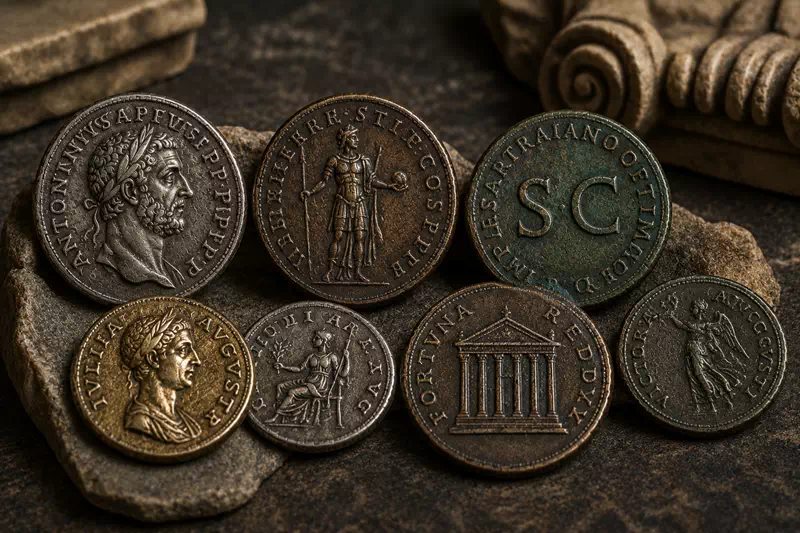
Reading Roman coins requires understanding that the Romans loved brevity. To fit complex political titles onto small metal surfaces, they used a system of abbreviations. A typical legend might read IMP CAESAR AVG, which stands for Imperator Caesar Augustus. By learning the standard lexicon of titles, you can reconstruct the full name and status of the ruler.
Difference between obverse and reverse inscriptions on Roman coinage
The obverse side of a coin almost always features the portrait of the emperor or a member of the imperial family, accompanied by their name and titles. In contrast, the reverse side typically displays a symbolic scene, a deity, or a personification of a virtue, often accompanied by a legend describing a specific achievement or a promise of prosperity.
Common Latin titles found on Roman coins and their historical significance
Titles were crucial for legitimizing an emperor’s power. The following table illustrates some of the most frequent abbreviations found on ancient coinage and their meanings.
| Abbreviation | Full Latin Term | English Translation |
|---|---|---|
| IMP | Imperator | Commander/Emperor |
| AVG | Augustus | Majestic/Revered One |
| COS | Consul | Consul (held office) |
| TR P | Tribunicia Potestas | Tribunician Power |
The evolution of Roman coin inscriptions from the Republic to the late Empire
During the Roman Republic, inscriptions were relatively simple, often naming the family of the moneyer. As the Empire consolidated, inscriptions became more formulaic and propagandistic, emphasizing the divine right of the emperor. By the late Empire, the lettering style became more stylized and sometimes less precise, reflecting the economic pressures and rapid shifts in political leadership of the era.
Are there specific fonts or lettering styles used in different Roman mints
Yes, regional mints often left their mark through distinct epigraphic styles. A coin struck in Rome might feature elegant, classical lettering, while a provincial mint in Gaul or Antioch might show a more rustic or hurried hand.
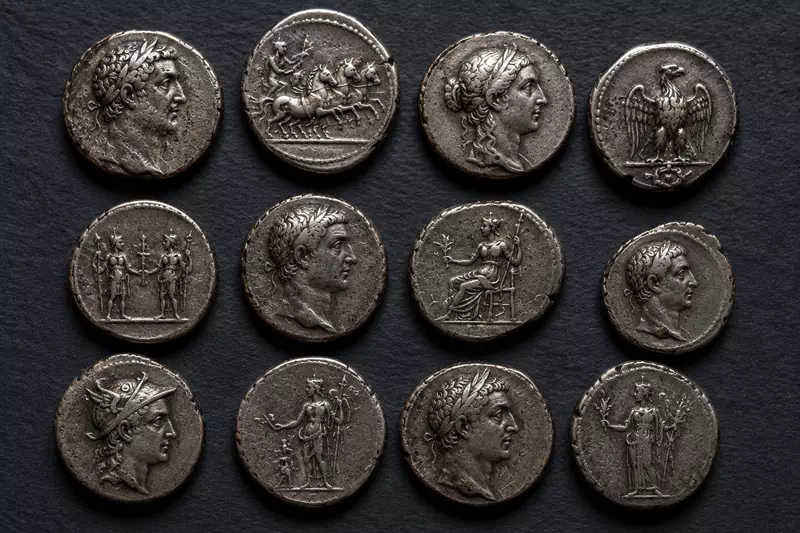
Unlocking the political power of ancient coinage
How Roman coin inscriptions were used as propaganda tools
Coins were the mass media of the ancient world. By circulating inscriptions that boasted of military victories or public benevolence, emperors could broadcast their image to the furthest corners of the realm
What do the letters S C stand for on Roman bronze coins
The letters S C appear frequently on bronze coinage, standing for Senatus Consulto, meaning by decree of the Senate. This was a vital mark of authority that designated the coin as official state currency, signaling the harmony between the emperor and the Roman Senate.
How to date a Roman coin using its inscribed titles and consulship numbers
Dating is often possible by tracking the iteration of the consulship (COS) or the Tribunician power (TR P). Because these titles were renewed annually, they function like a date stamp. The following table provides a quick guide to understanding these chronological indicators.
| Indicator | Historical Function | Dating Utility |
|---|---|---|
| COS I, II, III | Number of consulships | Helps narrow down the year |
| TR P I, II, III | Years of Tribunician power | Provides a precise annual count |
| P P | Pater Patriae | Marks the title of Father of the Country |
How Roman emperors use coin inscriptions to announce military victories
When an emperor won a campaign, the reverse inscription would often include titles like GERMANICUS or DACICUS, indicating the people conquered. These legends served as public records of military dominance, ensuring that even those in distant provinces knew of the emperor’s martial prowess.
Examples of religious or mythological themes reflected in Roman coin legends
- PIETAS: Often paired with images of a woman sacrificing, symbolizing religious devotion.
- VICTORIA: Celebrating the goddess of victory to imply divine favor for the state.
- AETERNITAS: Used to suggest the eternal nature of the Roman Empire and the imperial line.
- CONCORDIA: Depicting harmony, often used during times of political transition to calm the public.
Begin your journey into numismatic discovery
Preserving the legacy of ancient Rome in your private collection
Building a collection is an investment in human history. By carefully cataloging the inscriptions on your pieces, you ensure that the stories of the Roman Empire remain preserved for future generations.
Relying on professional expertise to build a high quality portfolio
Navigating the world of ancient coins can be complex. Partnering with experienced experts allows you to acquire pieces with confidence, knowing that each coin has been vetted for its authenticity and numismatic value. Let us help you curate a collection that stands the test of time.
Frequently asked questions about ancient coin legends
What words were on Roman coins?
Roman coins featured a wide variety of words, primarily focusing on the emperor’s name, titles, and public honors. You will frequently find words related to political offices like Consul or Tribunician power, as well as virtues like Concordia or Victoria. These inscriptions were carefully selected to convey specific messages about the legitimacy and character of the ruler.
What do the tiny letters on coins mean?
Tiny letters on the field of a coin often serve as mint marks or control marks. These marks indicate the specific city or workshop where the coin was produced and sometimes identify the official responsible for the batch. Understanding these small details is essential for advanced numismatists looking to track the economic reach of the Roman Empire.
What did Romans put on their coins?
Beyond the emperor’s portrait, Romans included symbols of their religious, political, and cultural life. Reverses often displayed deities, personifications of virtues, architectural monuments, or military trophies. These elements combined with the inscriptions to form a complete visual and textual record of what the Roman state deemed important at the time of minting.
What is the significance of the letters TR P found on many Roman coins?
The letters TR P stand for Tribunicia Potestas, representing the power of the Tribune of the Plebs. This was one of the most important titles an emperor held, as it granted them the authority to protect the common people and veto legislation. By including this on coins, emperors demonstrated their commitment to the welfare of the Roman citizenry.
ClassicWorldCoins was created by a passionate collector with a deep interest in ancient coins and their stories. Through this blog, he shares his discoveries, insights, and favorite pieces to help others explore the fascinating world of numismatics.