Medieval/Islamic coins

Showing all 12 results

a large selection of medieval – islamic coins to sell : abbasides, sassanides, silver coins, Denier tournois

Monnaies médiévales et islamiques à vendre : dirhams, deniers en argent, denier tournois, gros tournois…


Medieval and Islamic coins for sale

At some point in the 7th century, Islamic coinage made a decision no other monetary tradition had ever made. It removed the human figure entirely. No emperor, no deity, no portrait of any kind. In its place, pure calligraphy: Quranic inscriptions, the name of the caliph, the mint, the date in the Hijri calendar. The Islamic dirham is one of the most radical objects in the history of money, and it remains one of the most underrepresented categories in Western numismatic collections.

Abbasid silver dirhams

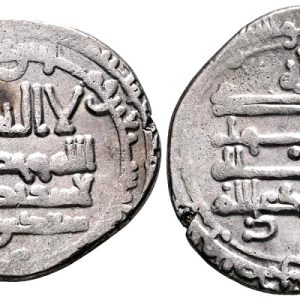
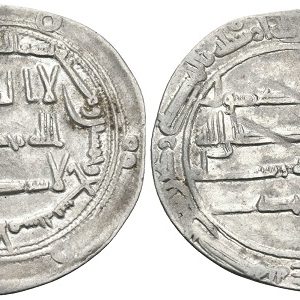
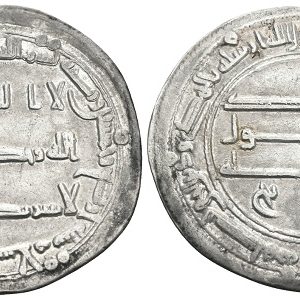
The core of this section is a group of Abbasid Caliphate silver dirhams, struck under the caliphs Al-Mansur (AH 136-158 / 754-775 AD) and Al-Mahdi (AH 158-169 / 775-785 AD). The Abbasid caliphate ruled from Baghdad and presided over one of the most sophisticated monetary systems of the medieval world. Their dirhams circulated from Central Asia to the Atlantic, carried by trade networks that dwarfed anything contemporary Europe could produce. The design is austere and deliberate: three concentric rings of Arabic script on each face, no ornament, no image. Reading one requires knowledge of Arabic, which is precisely why so few Western collectors pursue them and why good examples remain surprisingly accessible.

A transitional moment in history

The folis of Abd al-Malik ibn Marwan (687-705 AD) was struck during the brief period when early Islamic coinage still imitated Byzantine prototypes. Within a few years, Abd al-Malik would order the complete redesign of Islamic coinage into the purely epigraphic form that defined it for centuries. This coin captures a moment that did not last: the last gasp of a figurative tradition before it disappeared from Islamic mints entirely.

Medieval European and Armenian issues

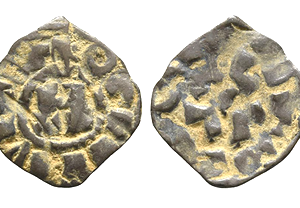
The European side of this section is modest but historically precise : a silver denaro from Lucca struck under Henry III or IV (1039-1125) and a billon denaro from the Republic of Ancona (before 1392) represent the hammered silver tradition of medieval Italy, where dozens of independent minting authorities produced small silver coins for local circulation. An Armenian kardez of Hetoum I (1226-1270) adds a less common geography: the Armenian kingdom of Cilicia, which occupied a fascinating geopolitical position between the Byzantine, Islamic, and Crusader worlds.

Beyond the Mediterranean

The silver drachm of the Kardamaka dynasty from India (3rd-4th century AD) extends the collection beyond its usual geographic boundaries. The Kardamakas were a Western Kshatrapa dynasty whose coinage blended Indo-Greek artistic conventions with local traditions.