
a large selection of bronze and silver roman coins from the republican period: silver sestertius, silver denarius, bronze cast coins, sextans, uncia, semuncia, quartuncia, quadrans, sextans, triens, semis, dorans, As…
Un large choix de monnaies républicaines romaines en bronze et argent. Deniers en argent, sesterces en argent, monnaies coulées en bronze…
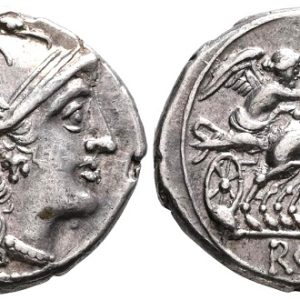
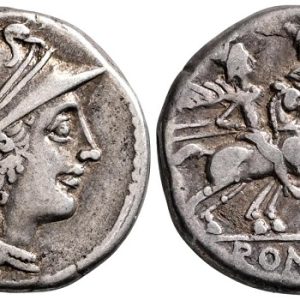
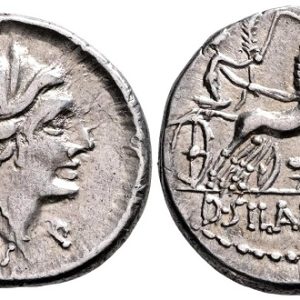
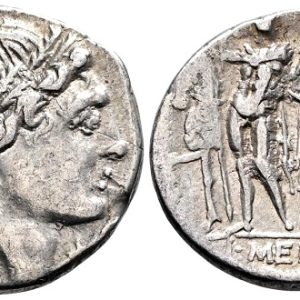
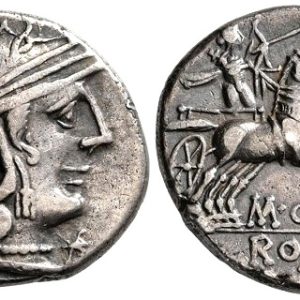
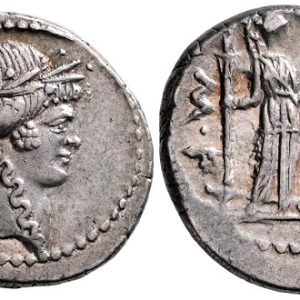
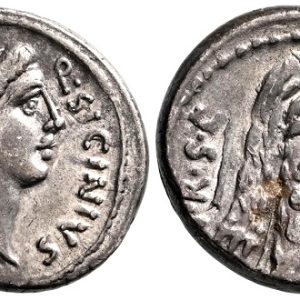
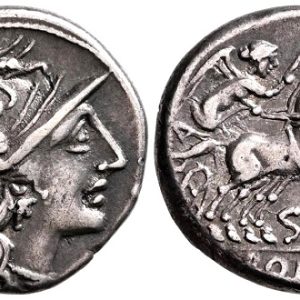
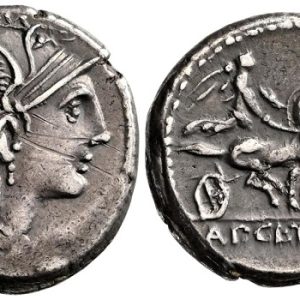
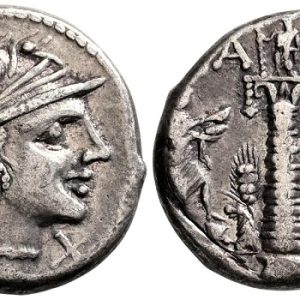
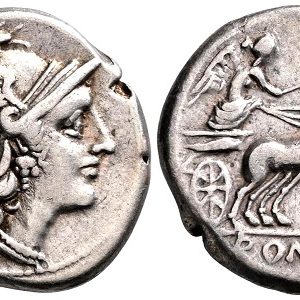
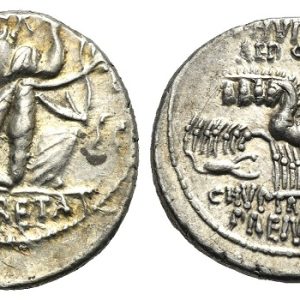
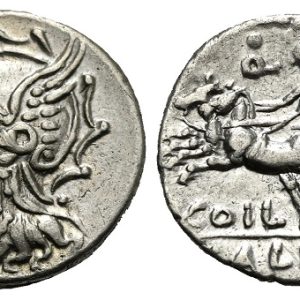
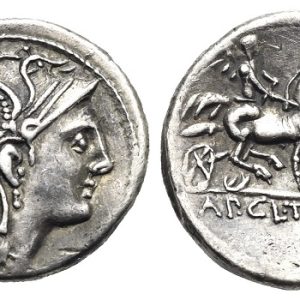
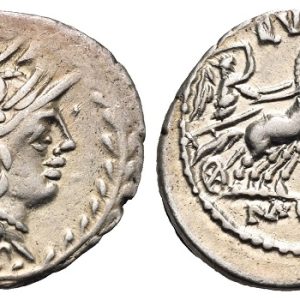
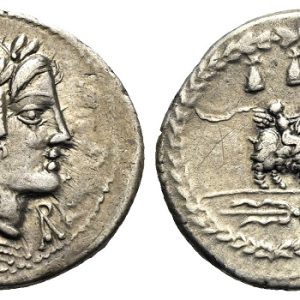
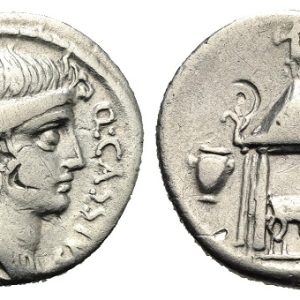
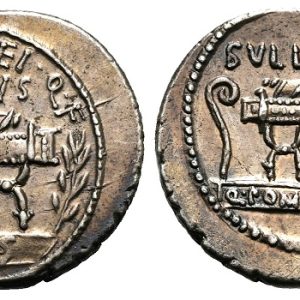
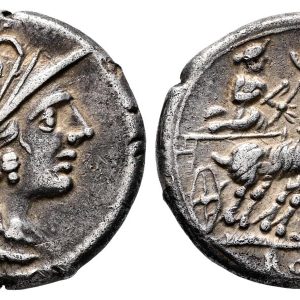


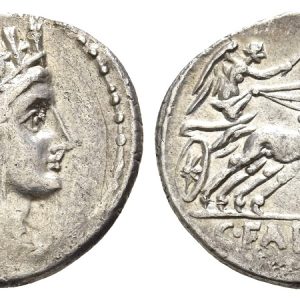
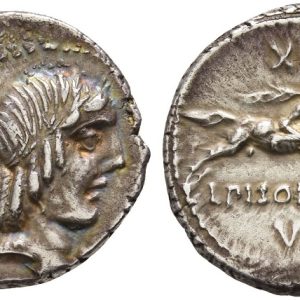


Roman Republican coins for sale: coinage of the Roman Republic
Roman Republican coins belong to a world where Rome had no emperors, no centralized power, and no imperial imagery. Issued between the 4th century BCE and 27 BCE, these coins come from a political system built on elected offices, competition between elite families, and constant military expansion. More than simple currency, Republican coins are primary historical documents created at the very moment Rome was becoming a superpower. Unlike later Imperial issues dominated by imperial portraits, Republican coinage reflects a society where identity, prestige, and legitimacy were negotiated through symbols, ancestry, and public achievement. For collectors and historians, these coins offer direct insight into how the Roman Republic represented itself before absolute power reshaped its institutions.
Coinage in a Republic without Emperors
Roman Republican coinage developed in a political environment fundamentally different from that of the Empire. There was no emperor controlling imagery or messaging. Instead, coin production was supervised by elected magistrates, each operating within a competitive political system where reputation and family legacy mattered deeply. As a result, Republican coins display an extraordinary diversity of designs. Gods, heroes, mythological scenes, military victories, and references to ancestral achievements appear across the series. This diversity makes Roman Republican coins particularly attractive to collectors seeking historical complexity rather than uniform imperial branding.

From cast bronze to a Mediterranean currency
The earliest Republican coins were heavy cast bronze pieces known as aes grave, produced in the 4th century BCE. These thick, molded coins reflect a local economy rooted in Italy, long before Rome dominated international trade. Their weight-based system illustrates an early stage of Roman monetary thinking. A decisive shift occurred around 211 BCE with the introduction of the silver denarius. This innovation allowed Rome to pay for armies, fund campaigns, and manage trade across vast territories. The denarius quickly became the backbone of Republican finance and later continued under the Empire, proving the effectiveness of the Republican monetary framework.
Denominations shaped by expansion and war
Roman Republican coinage was structured around practical needs created by constant warfare and territorial growth. The silver denarius, typically weighing between about 3.8 and 4.5 grams depending on period, served as the principal denomination for military and state payments. Alongside it circulated the victoriatus, a lighter silver coin of approximately 3.3 grams, used especially in regions influenced by Greek monetary traditions. Bronze coins such as the as, dupondius, and quadrans handled daily transactions within Roman society. Together, these denominations formed a flexible system capable of supporting both local economies and large-scale military logistics.
Magistrates, families, and political messaging
One of the defining characteristics of Roman Republican coins is the presence of magistrates’ names. These officials, known as tresviri monetales, were responsible for overseeing coin production and often used coin designs to highlight their family lineage or political achievements. Through imagery and inscriptions, Republican coins functioned as tools of self-promotion within a competitive elite. Military victories, divine favor, and legendary ancestors were displayed to reinforce social standing. Today, these details allow scholars to reconstruct political careers and family networks otherwise lost to history.
Symbols that defined the Roman Republic
The iconography of Roman Republican coins is deeply tied to Republican values. The personification of Roma appears frequently, embodying the authority and permanence of the state. Deities such as Jupiter, Mars, and Minerva reinforce themes of power, warfare, and divine protection. Scenes featuring chariots, ships, and trophies emphasize expansion and military success. Unlike Imperial coinage, which focuses on rulers, Republican imagery communicates collective identity, ancestral pride, and civic ideology. Each coin was designed to be understood by its users, making symbolism central to its purpose.
Why collect Roman Republican coins?
Roman Republican coins appeal to collectors who value originality, historical depth, and intellectual challenge. They come from a period defined by political rivalry, institutional experimentation, and rapid expansion. No two Republican collections are alike, and each coin adds a new layer to the story of Rome before the emperors. For those seeking ancient coins with strong historical context, rich symbolism, and enduring numismatic interest, Roman Republican coins remain one of the most rewarding and intellectually demanding fields in ancient numismatics.