
How to display old coins?
Apr
Old and ancient coins deserve to be seen, but a good display should also protect them from scratches, unstable materials, moisture and unnecessary handling. For most collectors, the best approach combines individual protection with a suitable presentation system, such as capsules, coin trays, an enclosed display case, an album or a properly designed frame.
The right method depends on the size of your collection, the type of coins you own and how often you want to handle them. Here are the most practical ways to display old coins safely at home without compromising their preservation.
The best ways to display old coins
| Display method | Best for | Protection |
|---|---|---|
| Capsules on stands | Individual valuable coins | Good to high if made from stable materials |
| Coin trays or drawers | Ancient and irregular coins | Good, depending on materials and enclosure |
| Enclosed display cases | Home displays and themed groups | Good to high when properly designed |
| Coin albums | Larger organized collections | Good if PVC-free and suitable for the coins |
| Frames or shadow boxes | Wall displays | Variable, capsules or inert mounts are preferable |
| Rotating displays | Large or valuable collections | Depends on the holders and display system used |
1. Use coin capsules with display stands
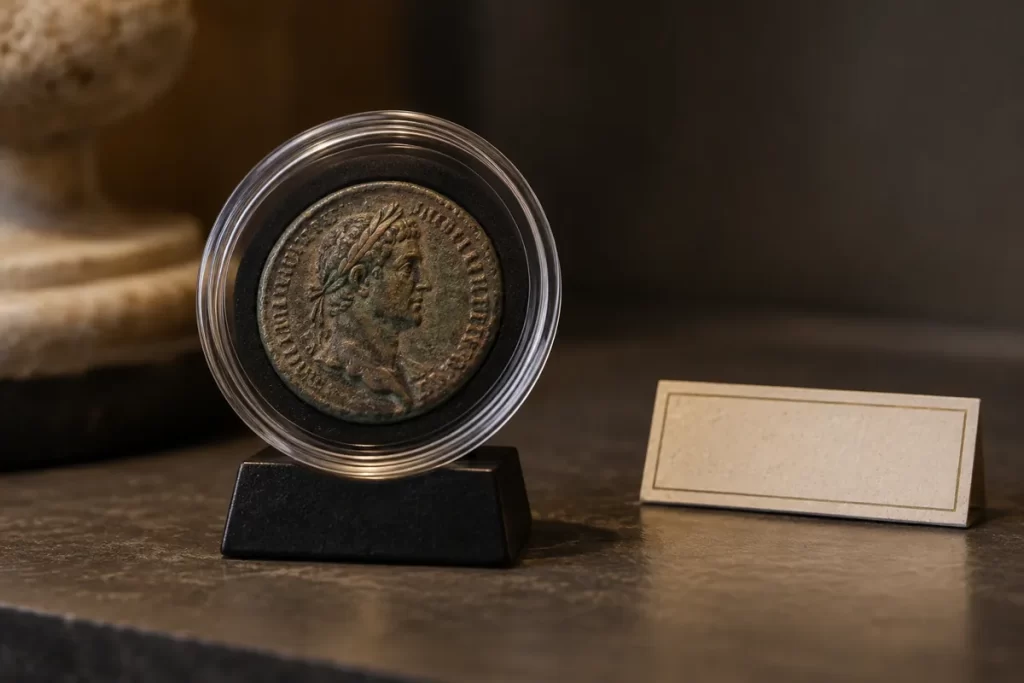
A clear coin capsule is one of the simplest ways to display an old or ancient coin while reducing direct handling. The holder protects the surfaces while allowing the coin to be examined and can be placed on a small stand inside a cabinet or display case.
This works especially well for individual Roman, Greek, Byzantine or medieval coins. A small label can be placed beside the coin with information such as the ruler or issuing authority, denomination, approximate date and mint when known.
Choose holders made from known, stable materials such as polyethylene, polypropylene, PET or suitable acrylic plastics. Avoid soft PVC holders, whose plasticizers can contribute to corrosion, particularly on copper-alloy coins. A generic “coin-safe” label is less useful than knowing what material the holder is actually made from.
2. Display a collection in coin trays or drawers
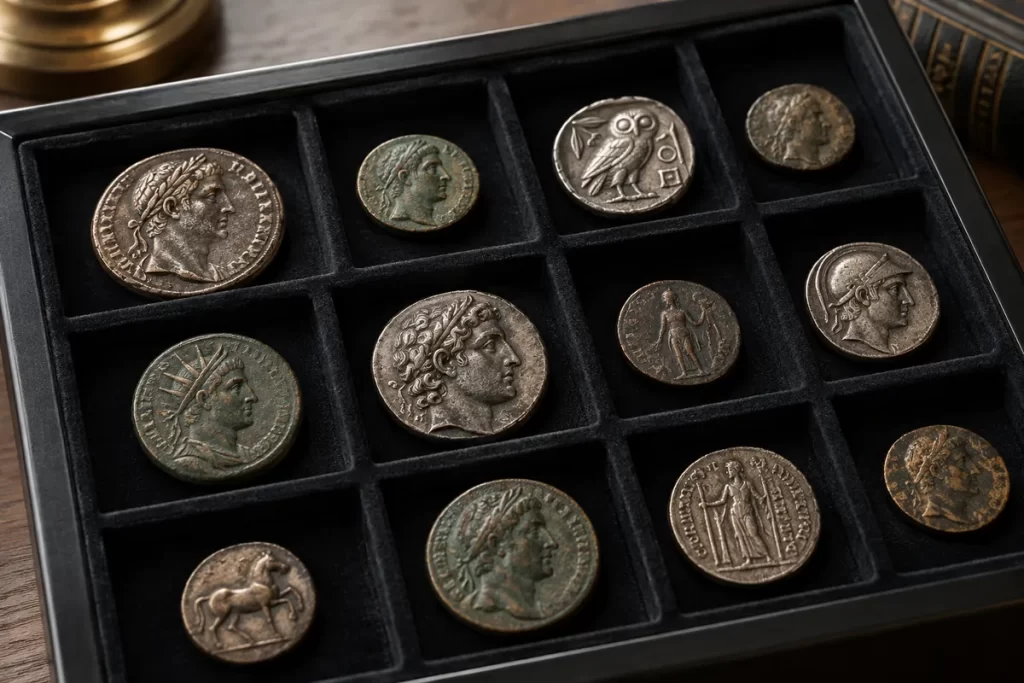
Coin trays are particularly useful when you want to view an entire group while retaining easy access to each specimen. Individual compartments prevent coins from rubbing against one another and make the collection easier to organize.
For an ancient coin display, trays can be arranged by emperor, dynasty, geographical region, denomination, metal or historical period. Roman coins, for example, can be displayed chronologically or grouped by denomination or mint.
Pay attention to the materials used in the tray. Fabrics, foams, adhesives and wood products are not automatically suitable for long-term numismatic storage. Particularly valuable or sensitive coins can remain inside individual capsules while being placed in the tray.
3. Choose an enclosed coin display case
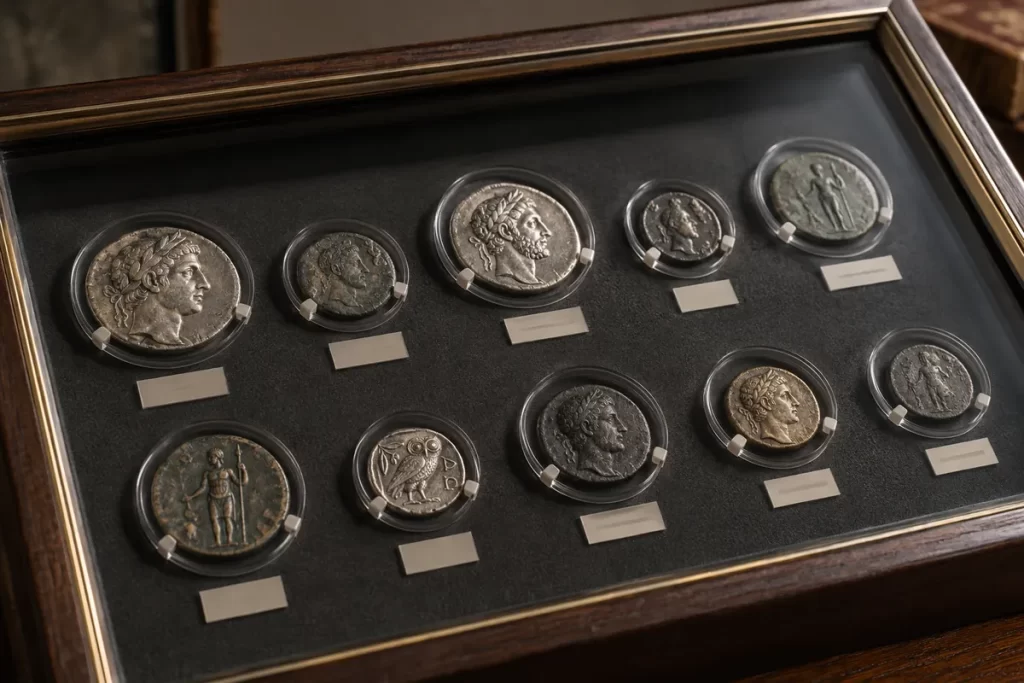
An enclosed coin display case is a practical way to present several coins together while reducing dust, accidental handling and sudden environmental changes.
A shallow tabletop case can suit a small themed collection, while a lockable cabinet or display case is more appropriate for a larger or more valuable collection.
For an ancient coin display case, the materials used inside are important. Some woods, foams, rubbers, adhesives, paints and composite boards can release compounds that affect metal surfaces over time. Wood should not automatically be assumed safe simply because traditional coin cabinets were often made from it, some species, particularly oak, can release acidic vapours.
If the composition of a display case is uncertain, keeping each coin inside a suitable capsule provides an additional barrier. Valuable collections should also be photographed and inventoried, and display cases should be secured where appropriate.
4. Use coin albums for an organized collection
Coin albums are less decorative than a glass display case, but they provide an efficient way to organize and examine a larger collection. They are particularly convenient for coins arranged by country, year, denomination or series.
Use albums and pages designed for numismatic collections and made from PVC-free, stable materials. Thick, irregular or fragile ancient coins are often better suited to trays or individual capsules than to tightly fitted album pockets.
If long-term preservation is your main concern, see our guide to coin collection storage and preservation.
5. Display coins in a frame or shadow box
A small collection can also be displayed on a wall using a deep frame or shadow box. This works particularly well for a thematic group such as Roman emperors, coins from one ancient city or several denominations from the same period.
Coins should never be attached directly with glue or adhesive tape. Avoid mounts that place excessive pressure on the edges or surfaces.
A safer solution is to place each specimen in a transparent capsule or a purpose-made mount made from stable materials, then secure the holder rather than the coin itself inside the frame.
6. Create a rotating coin display
You do not need to keep an entire collection permanently on display. For a large or valuable collection, rotating a smaller selection can provide a useful balance between presentation, security and preservation.
The selection can change according to a ruler, mint, deity, historical event, geographical region or coin type while the remainder of the collection stays properly stored.
How to display ancient coins without damaging them
Ancient coins deserve particular care because their surfaces may include fragile patinas, mineral deposits or areas affected by centuries of burial and environmental exposure. The goal is to present them without introducing new sources of corrosion or physical damage.
Use stable, coin-safe materials
Avoid soft PVC holders and unidentified plastics. Materials in trays, cabinets and frames also matter: certain woods, adhesives, rubbers, foams and textiles can release compounds that contribute to tarnishing or corrosion.
Do not assume that a decorative material is suitable simply because it is included in a commercial display product. When the material is unknown, isolating the coin in a known archival-quality holder or capsule is a safer option.
Keep humidity low and stable
Humidity is one of the most important environmental factors affecting metals because the risk of corrosion generally increases as relative humidity rises. Museum conservation guidance recommends keeping metal collections as dry as practical, relative humidity below 30% is ideal for many metal-only collections, although levels around 35–55% are more common in mixed collections and domestic environments.
For a home collection, the priority is to avoid persistent dampness and major fluctuations. Damp basements, bathrooms, kitchens, uninsulated attics and locations directly beside radiators or heating vents are poor choices for coin displays.
If a coin shows signs of active corrosion, simply placing it in a display case is not enough. It should be isolated from unaffected coins and may require a drier microclimate or professional conservation advice.
Direct sunlight should also be avoided. Metal coins themselves are not generally light-sensitive in the same way as paper or textiles, but sunlight can heat an enclosed case and create unwanted temperature fluctuations. Light can also affect labels, fabrics and other materials used in the display.
Minimize unnecessary handling
When removing a coin from its holder, work over a clean, padded surface and hold it by the edges whenever possible. Touching the faces can transfer oils, salts and dirt from the skin to the metal.
Gloves can be useful when handling sensitive metal objects, but fragile or flaking archaeological surfaces require particular care because loose fibres can catch on unstable material.
Keep clear photographs of both the obverse and reverse of valuable coins. They are useful for inventory, identification, insurance and security purposes.
How to organize a coin collection for display
A good coin collection display should be easy to understand rather than simply filling every available space. A logical structure makes the collection more interesting to view and easier to manage.
You can organize displayed coins by:
- chronological period
- ruler or dynasty
- mint or geographical region
- denomination
- metal
- historical theme
- civilization, such as Greek, Roman or Byzantine coins
Keep display labels concise. The identification, approximate date, denomination and mint when known are usually enough beside the coin. More detailed information such as provenance, weight, diameter, catalogue references and purchase records can remain in a separate inventory.
If you are still building your collection, our beginner’s guide to collecting ancient coins explains how to define a collecting focus and organize your acquisitions.
Frequently asked questions about displaying coins
What is the safest way to display old coins?
For valuable coins, placing each specimen in a stable, PVC-free capsule and arranging the capsules in a suitable tray or enclosed display case provides a good balance between visibility, organization and protection.
How can I display coins at home?
For a small collection, capsules on individual stands or a shallow enclosed case are practical options. Larger collections can be presented in compartmented trays, drawers or cabinets. Whatever method you choose, avoid damp locations, excessive heat, unstable materials and unnecessary handling.
Can I display coins in a frame?
Yes. A deep frame or shadow box can be used to display coins, but they should not be glued or taped directly to the backing. Use individual capsules or purpose-made mounts made from stable materials instead.
What is the best way to display ancient coins?
Ancient coins are particularly well suited to compartmented trays, coin cabinets and enclosed display cases because these systems accommodate irregular sizes and allow identification labels to be added. Valuable or fragile specimens can remain in individual capsules for additional protection.
How should I display Roman coins?
A Roman coin display can be organized chronologically by emperor, dynasty, denomination, mint or historical theme. Coin trays and enclosed cases work particularly well because Roman coins vary considerably in diameter, thickness and shape.
Should I clean old coins before displaying them?
Usually not simply to improve their appearance. Polishing, abrasive cleaning and commercial metal cleaners can permanently alter a coin’s surface, toning or patina. Removing corrosion from an ancient coin can also expose unstable surfaces and is best approached as conservation rather than cosmetic cleaning.
If a coin genuinely requires treatment, the appropriate method depends on its metal, surface and condition. For more information, read our guide on how to clean ancient coins.
Display your collection without sacrificing preservation
The best way to display old coins is to make them visible without making them unnecessarily vulnerable. Use stable materials, avoid PVC and direct adhesives, maintain a reasonably dry and stable environment, and limit unnecessary handling.
For a few important coins, individual capsules and a small display case may be sufficient. For a larger ancient coin collection, trays, drawers or a rotating selection often provide a better combination of visibility, organization and protection.
The display should serve the collection rather than put it at risk: the surfaces, patina and identifying details of each coin are more important than any decorative presentation.
Sources and further reading
Conservation recommendations in this article are based primarily on the Canadian Conservation Institute’s guidance on the care of coins, medals and medallic art and The Metropolitan Museum of Art’s guidance on the care and handling of art objects.

ClassicWorldCoins was created by a passionate collector with a deep interest in ancient coins and their stories. Through this blog, he shares his discoveries, insights, and favorite pieces to help others explore the fascinating world of numismatics.