
The Gallic Empire: a brief history of Rome’s Third-Century breakaway state
Mar
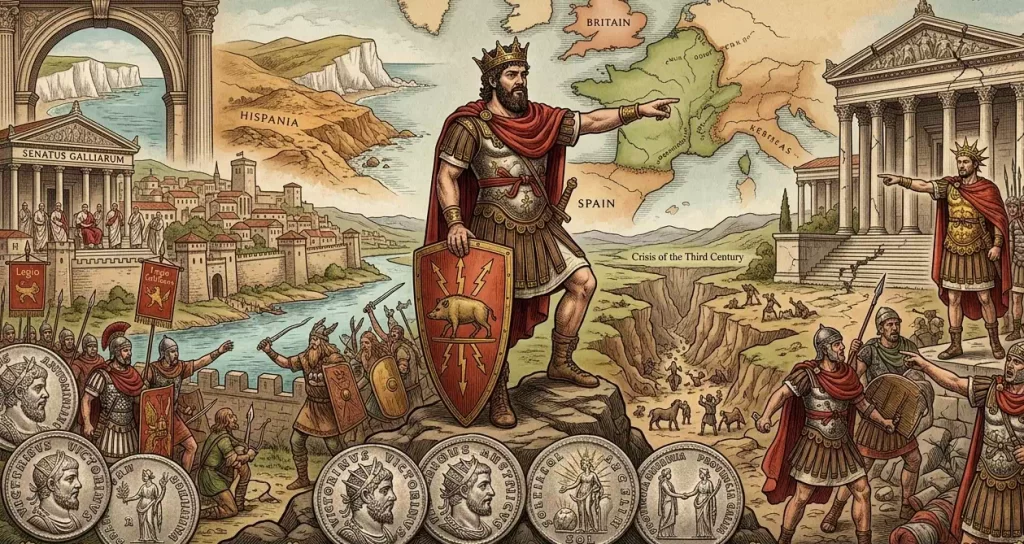
The Gallic Empire represents one of the most fascinating episodes of the Crisis of the Third Century, a period marked by instability, civil war, and economic turmoil within the Roman world. From 260 to 274 AD, a significant portion of the Western Roman provinces seceded to form an independent sovereign entity. This breakaway state, which included territories spanning Gaul, Britain, and Spain, challenged the central authority of Rome. By examining the rise, administration, and eventual reintegration of this unique historical phenomenon, enthusiasts can better understand the complex dynamics of the Roman Empire during its most fragile era.
The origins and rise of a separatist power
The Crisis of the Third Century Context
The mid-third century was defined by a profound political fragmentation, characterized by constant warfare and the rapid succession of emperors. As the central government in Rome struggled to maintain control over distant borders, the periphery felt the brunt of both economic inflation and external threats. This environment created the ideal conditions for a regional rebellion, as local populations and military leaders sought stability through autonomy rather than relying on an increasingly ineffective imperial center.
Postumus and the Secession of the Western Provinces
In 260 AD, the military commander Postumus seized the opportunity provided by the capture of the Emperor Valerian by the Persians. By establishing his own sovereign rule, Postumus effectively separated the Rhine frontier and its surrounding territories from the rest of the Roman Empire. His swift action allowed him to consolidate power, positioning himself as a legitimate protector of the West rather than a mere usurper, thereby gaining the loyalty of the provincial legions stationed along the critical northern borders.
Defining the Geographic Reach of the Gallic Empire
The territorial scope of this state was significant, encompassing vital regions that provided both resources and manpower. The geographic reach of the empire included:
- The provinces of Gaul, acting as the administrative heartland.
- The island of Britain, which provided maritime security and trade routes.
- The Iberian peninsula, serving as a strategic buffer and agricultural hub.
These territories were essential for maintaining the imperial administration and protecting the frontiers against the rising pressure of Germanic incursions.
Governance and Military Stability Under the Usurpers
Administration and the Role of the Gallic Senate
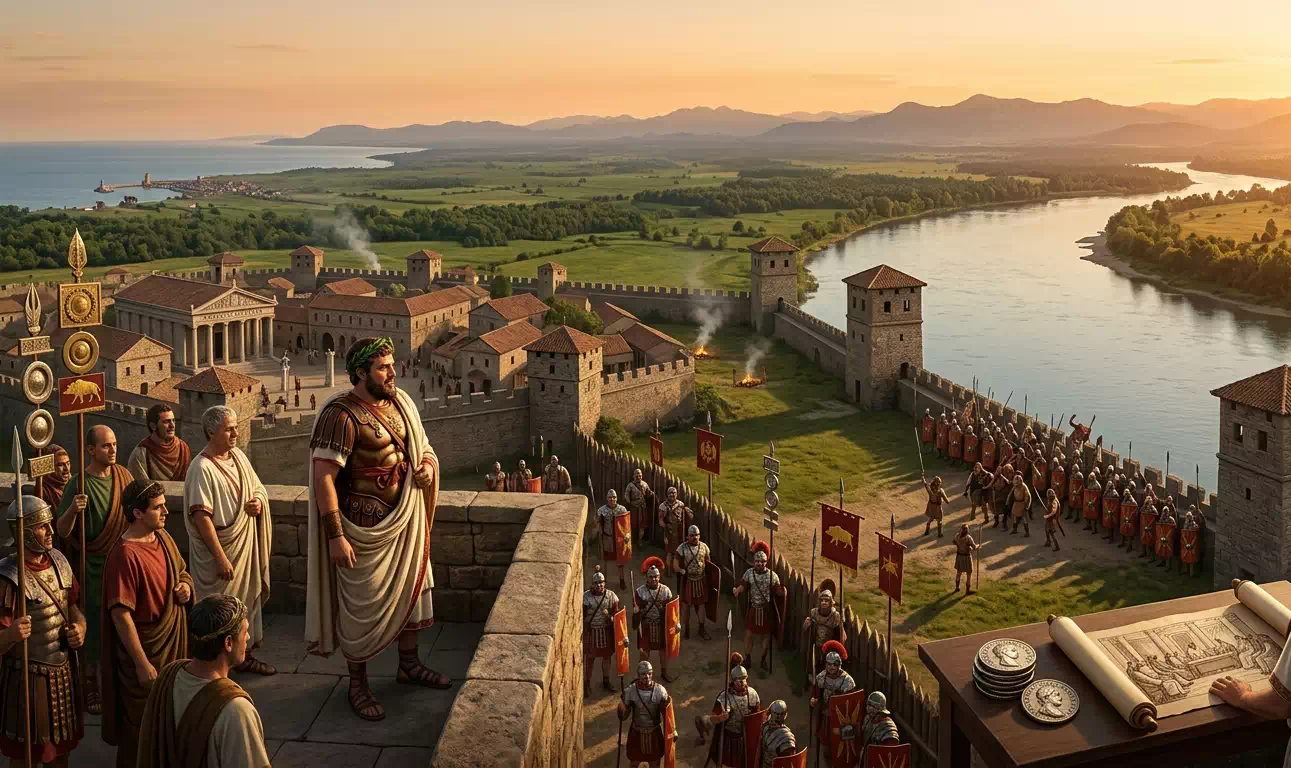
To establish lasting political legitimacy, the leaders of the Gallic Empire mirrored the Roman administrative structure. They maintained a senate and appointed their own consuls, creating a sense of continuity that appealed to the provincial elites. This civil administration was designed to function independently of Rome, ensuring that the tax system and judicial processes remained operational even during periods of intense military conflict.
Defending the Frontiers Against Germanic Incursions
The primary mandate of the Gallic rulers was the frontier defense of the Rhine and northern borders. By focusing military resources directly on these vulnerable areas, Postumus and his successors successfully repelled Germanic tribes, earning the support of the local population. This focus on military security provided a tangible benefit to the inhabitants of the Western provinces, who had previously felt abandoned by the distant and distracted government in Rome.
Legitimacy and the Struggle for Roman Identity
Despite their rebellion, the Gallic leaders never sought to destroy Roman traditions. Instead, they viewed themselves as the true guardians of Roman identity in the West. Through the use of panegyrics and public displays of authority, they argued that their state was a necessary evolution to preserve the dignity and safety of the Roman Empire when the central government failed to fulfill its basic obligations to its citizens.
The Numismatic Legacy and Economic Function
Mints and the Production of Imperial Coinage
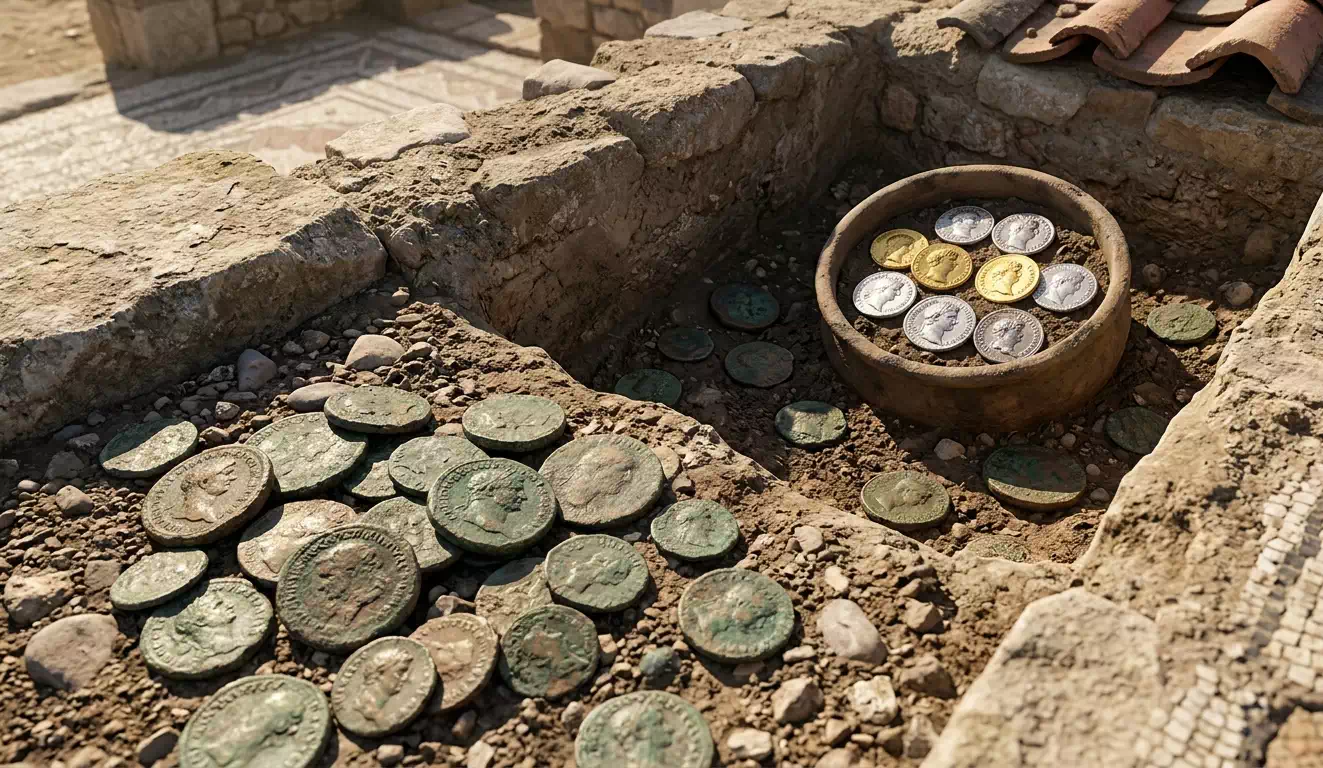
The study of Gallic coinage remains a primary source for understanding this period, as it provides a clear window into the aspirations of these rulers. Various mints, such as those in Cologne and Trier, produced large quantities of currency that circulated widely. For any modern specialist of ancient coins, these pieces serve as essential artifacts, revealing the economic strength and the political messaging utilized by the various emperors of the breakaway state.
Debasement and Economic Realities in the West
Economic stability was a persistent challenge, often leading to the debasement of the coinage to pay the military and maintain the bureaucracy. While the Gallic Empire attempted to manage its economic reality with the same tools as Rome, the cost of sustained defense often outpaced tax revenues. This fiscal pressure influenced the quality of the currency and affected the overall trade dynamics within the region.
Iconography and Political Messaging on Gallic Coins
The iconography featured on these coins was meticulously crafted to convey specific themes of power and triumph. Common designs often included:
| Theme | Symbolism |
|---|---|
| Military Victory | Depictions of the emperor with captured barbarians. |
| Imperial Virtue | Figures of Sol or Pax to denote stability and divine favor. |
| Provincial Unity | Allegories representing the loyalty of Gaul and Britain. |
These artistic choices were instrumental in building political authority among the populace and soldiers alike.
The Fall of the Empire and Roman Reunification
Internal Fragmentation Under Tetricus
By the early 270s, the unity of the Gallic Empire began to dissolve under the reign of Tetricus. Internal fragmentation and the strain of constant border defense weakened the state’s resolve. The loss of central cohesion allowed the central Roman government to regain influence, leading to a period of instability where local commanders were no longer able to maintain the level of sovereignty established by their predecessors.
The Campaign of Aurelian and the Restoration of Order
The rise of the Emperor Aurelian marked the beginning of the end for the breakaway state. Through a series of decisive military campaigns, he facilitated the reunification of the Roman Empire, bringing the Western provinces back under central control. This restoration of order was a testament to the resilience of the Roman state, which successfully reintegrated its lost territories and ended the brief era of Gallic independence.
The Legacy of the Gallic Empire in Historical Memory
The Gallic Empire (Vastator Orbis), as detailed in historical records, left a lasting impression on the narrative of the third century. It serves as a reminder of how quickly political structures can shift when legitimacy is questioned. As explored in academic analysis of the era, this period remains a fundamental case study for the endurance of Roman influence.
Final Reflections on the Gallic Secession
The Gallic Empire stands as a compelling testament to the resilience and volatility of the ancient world. Understanding this era requires a careful balance of historical context and physical evidence, particularly for those passionate about numismatics. For collectors and investors seeking to acquire pieces of this narrative, our ancient coins shop is a Swiss-based specialized numismatic firm dedicated to the curation and expert appraisal of rare ancient coinage, ensuring that every historical artifact is authenticated with the highest scholarly transparency.
Frequently Asked Questions About the Gallic Empire
What is the Gallic Empire?
The Gallic Empire was a breakaway state that seceded from the Roman Empire between 260 and 274 AD. It encompassed the provinces of Gaul, Britain, and Spain, functioning as a sovereign entity during the turbulent Crisis of the Third Century. This state was established to provide regional stability and security when the central Roman government was unable to effectively manage its vast frontiers.
Which Roman emperor had a male lover?
Historical accounts from the era, particularly those discussing the lives of emperors during the third century, often contain anecdotes regarding the personal lives of Roman rulers. While many figures are subjects of such reports, identifying definitive historical facts can be difficult due to the biased nature of ancient chroniclers. These stories were frequently used as political tools to undermine the legitimacy of an emperor by questioning his moral character.
What was the coinage of the Gallic Empire?
The imperial coinage of the Gallic Empire consisted primarily of antoniniani, which were silver-washed coins intended to facilitate trade and military payments. These coins featured distinct imagery designed to legitimize the local emperors and project military power to the provinces. Collectors value these coins today for their historical significance and their role in documenting the economic history of the Western provinces.
What ethnicity are the Gauls?
The term “Gauls” refers to the Celtic-speaking peoples who inhabited the region of Gaul, which includes modern-day France, Belgium, and parts of Germany. By the time of the Gallic Empire, the population was a complex mix of indigenous Celtic tribes and Romanized inhabitants. This cultural identity was deeply integrated into the Roman world, yet it maintained specific regional characteristics that helped distinguish the provinces from the Mediterranean core.
Further reading :
- https://www.britannica.com/place/Gaul-ancient-region-Europe
- https://althistory.fandom.com/wiki/Gallic_Empire_(Vastator_Orbis)
- https://www.thefrenchhistorypodcast.com/26-the-gallic-empire/

ClassicWorldCoins was created by a passionate collector with a deep interest in ancient coins and their stories. Through this blog, he shares his discoveries, insights, and favorite pieces to help others explore the fascinating world of numismatics.