
The legacy of the five good emperors in roman history
Nov
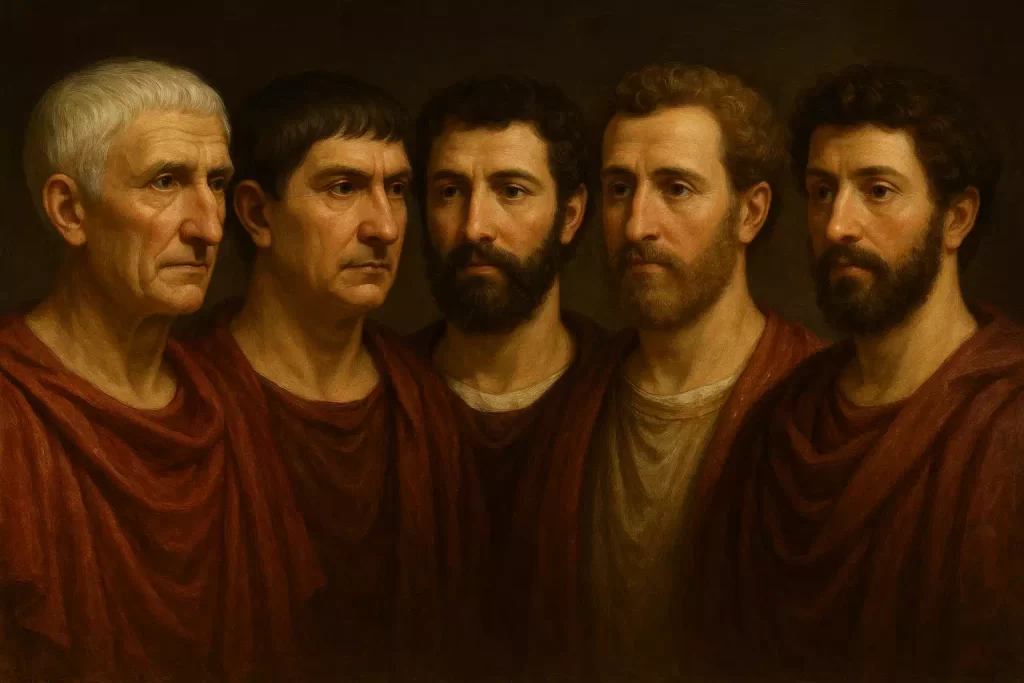
Praised as a golden age of stability and prosperity in the Roman Empire, the era of the Five Good Emperors stands out for its just governance and remarkable cultural achievements. From Nerva to Marcus Aurelius, these rulers earned their reputation through wise decisions, restrained power, and a dedication to the welfare of their citizens. Their reigns are a beacon for those fascinated by great leadership and the rare harmony it can bring to an empire, combining strength with prudence while shaping the future of Rome in profound ways.
Overview of the Five Good Emperors
Defining the Five Good Emperors
The term Five Good Emperors refers to a sequence of Roman leaders, Nerva, Trajan, Hadrian, Antoninus Pius, and Marcus Aurelius, who governed from 96 to 180 AD. Their recognition as “good” arises not from military conquest alone, but from their emphasis on administrative reform, justice, and the well-being of their subjects. Each contributed uniquely, shaping a period that historians often view as the Roman Empire’s most enlightened phase.
Historical Context of Their Reigns
Emerging after the tumultuous rule of Domitian, the Five Good Emperors presided over an age often called the “Pax Romana.” This era was marked by internal peace, economic growth, and territorial flourishing, even as challenges at the empire’s edges persisted. Their succession was notable for being based largely on merit and adoption rather than heredity, a rare practice that encouraged capable governance above all.
Characteristics That Made Them “Good”
What set these emperors apart was their consistent commitment to just administration, political stability, and a balanced approach to power. They avoided the excesses and tyranny that plagued many of their predecessors. Their adoption of successors based on ability created a framework for continuity, one largely absent in Roman history before and after this period.
The Individual Emperors
Nerva: The Innovator of a New Era
Nerva’s reign, though brief, laid the crucial foundations for what followed. By prioritizing reconciliation and reform after a violent period, he restored the Senate’s dignity and addressed land distribution issues. Nerva’s decision to adopt Trajan, a respected general, as his heir, set a precedent for choosing qualified successors over familial ties.
Trajan: The Architect of Expansion
Under Trajan, the empire reached its greatest territorial extent. His ambitious campaigns in Dacia and the East expanded Roman frontiers, bringing immense wealth. Yet, he also cared for Rome’s infrastructure, commissioning iconic works such as Trajan’s Market and his grand column, all while displaying remarkable generosity toward the populace through state-funded welfare programs.
Hadrian: The Defender of Roman Values
Hadrian shifted focus from expansion to consolidation, famously touring and fortifying the empire’s borders. The construction of Hadrian’s Wall in Britannia exemplifies his approach to defense and stability. Culturally, he supported the arts, standardized legal codes, and fostered Hellenic traditions, embodying a cosmopolitan yet pragmatic philosophy.
Antoninus Pius: The Peacekeeper
Antoninus Pius presided over a remarkably calm period, with no major wars recorded during his lengthy rule. He earned his title, “Pius, ” by displaying deep respect for tradition, senate authority, and judicial fairness. His emphasis on peace and continuity brought lasting benefits to the social fabric of Roman life.
Marcus Aurelius: The Philosopher King
Renowned as a stoic philosopher and wise ruler, Marcus Aurelius managed myriad crises, from plagues to northern invasions. While confronted by difficulties, his personal writings, later published as the Meditations, reflect a commitment to virtue and civic duty, values that continue to inspire ethicists and leaders today.
Impact and Historical Significance
The Political Structure During Their Reigns
Governance during this era blended imperial authority with a renewed respect for senatorial input and legal continuity. Emperors exercised their power with checks and balances, often involving the Senate in decisions and reinforcing the rule of law, a contrast to the autocratic tendencies seen under previous rulers.

Contributions to Roman Society and Culture
This period saw major investments in public works, philosophical thought, and the arts. Monuments, roads, and libraries flourished, and efforts to address poverty and justice reached new heights.
Lessons from Their Governance
By prioritizing experience, virtue, and merit in leadership succession, the Five Good Emperors demonstrated a model for stable and enlightened government. Their approach remains a benchmark for political theorists who examine how wise leadership and inclusive policies can underpin the longevity of states.
The End of the Five Good Emperors Era
With the death of Marcus Aurelius and the ascension of his son Commodus, the meritocratic-adoptive system collapsed. This marked a return to hereditary succession and set the stage for turmoil, highlighting the fragility of even the most sophisticated reforms if institutional guarantees are not maintained.
A Historic Evaluation of the Good Emperors
Overall, the Five Good Emperors are remembered for ushering in a rare period of enlightened rule, marked by visionary leadership, pragmatic policies, and cultural vibrancy. Their legacies endure not just in monuments and works of philosophy, but as examples of how leadership rooted in wisdom and restraint can positively shape history’s course.
Frequently Asked Questions about the Five Good Emperors
Who were the Five Good Emperors?
The Five Good Emperors were Nerva, Trajan, Hadrian, Antoninus Pius, and Marcus Aurelius, ruling consecutively from 96 to 180 AD. They are recognized for creating a period of unprecedented stability and prosperity within the Roman Empire.
What distinguishes the Five Good Emperors from others?
Unlike many rulers before and after, these emperors prioritized merit, effective governance, and public welfare. Their selection of successors based on aptitude instead of bloodline set them apart in Roman history and contributed significantly to their era’s successes.
How did each emperor contribute to the Roman Empire?
Nerva restored stability, Trajan expanded the empire, Hadrian focused on consolidation, Antoninus Pius ensured peace, and Marcus Aurelius offered philosophical guidance. Together, their reigns strengthened the empire’s core and legacy in distinct yet complementary ways.
Why is the term “Five Good Emperors” significant?
This phrase emphasizes a unique period where wise and just governance prevailed, showing that leadership qualities can have a profound effect on a nation’s fate. It highlights the contrast with less successful or more turbulent reigns in Roman history.
What led to the decline after their reigns?
After Marcus Aurelius, hereditary succession resumed with Commodus, whose rule lacked the virtues of his predecessors. The breakdown of the adoptive succession system and growing internal strife contributed to instability and the eventual decline of the Roman Empire’s golden era.

ClassicWorldCoins was created by a passionate collector with a deep interest in ancient coins and their stories. Through this blog, he shares his discoveries, insights, and favorite pieces to help others explore the fascinating world of numismatics.