
Ancient Greek Religion: beliefs, practices, and Deities
May
Ancient Greek religion is a cornerstone of Western culture, offering a captivating window into a society where gods and myths shaped every aspect of life. This article delves into the beliefs, ceremonies, and deities that defined Greek religious identity, exploring how these timeless traditions influenced history, community, and daily routines. Whether you are curious about the mighty Zeus or the grandeur of sacred festivals, you will discover how this vibrant faith left an enduring mark on the world, from Greek temples to modern storytelling.
Overview of Ancient Greek Religion
What is Ancient Greek Religion called?
The religious traditions of ancient Greece are often called “Hellenic religion” or “Hellenism.” This term reflects a faith built upon a rich mythology and lively public rituals. Unlike today’s organized faiths, Greek religion consisted of many local cults, each centered around specific deities, legends, and ceremonies. This diversity created a vibrant spiritual tapestry, with roots stretching back to the Bronze Age pastoralists and legends recounted by poets like Homer.
Key beliefs of Ancient Greek Religion
Central to ancient Greek religion was the belief in a powerful pantheon where gods displayed very human traits. People saw the divine in natural forces, from thunderbolts cast by Zeus to bountiful harvests blessed by Demeter. There was no dogma or holy scripture, instead, religion lived through oral tradition, storytelling, and shared rituals that united the community. Questions like fate, immortality, and the afterlife were explored through mythology and cult practices rather than strict doctrine.
Historical context of Greek Religion
Emerging long before Christianity took hold, ancient Greek religion shaped the culture, philosophy, and politics of the Mediterranean world. From the grand city-states of Athens and Sparta to rural sanctuaries on mountaintops, Greek faith evolved alongside shifting populations and political powers. Over time, it endured influences from Eastern religions, minor cults, and neighboring cultures, weaving into the complex fabric of Greek identity and arts.
The pantheon of Greek Gods
Who were the major Greek Gods?
The Greeks worshipped a powerful family of gods and goddesses, each with distinct personalities and spheres of influence. Some of the best known include Zeus (king of the gods), Poseidon (god of the sea), Hades (lord of the underworld), Demeter (goddess of crops), and Athena (goddess of wisdom). Many more, from Apollo to Hecate, filled every aspect of life and nature with meaning and guidance.
The Roles of Gods in Daily Life
Divine presence was everywhere in Greek society. People invoked the gods for safe voyages, healthy harvests, and victory in battle, offering prayers and libations at home altars or in public sanctuaries. Faith was not separated from daily activities, every meal, athletic contest, and political event was framed as a chance to honor the divine. Even personal ethics and community rules drew authority from the gods’ example and favor.
Myths and legends surrounding the Deities
Greek mythology teems with gripping tales: Zeus hurling thunderbolts, Persephone’s descent into Hades, and heroic quests by demigods like Heracles. These stories explained natural phenomena, justified rituals, and provided moral guidance. Myths brought the gods vividly to life, blending romance, rivalry, and adventure to make the divine world relatable. You might picture Homeric poetry being recited in the shade of olive trees, binding generations together through shared legend.
Rituals and practices in Ancient Greek Religion
Sacred sites and temples: where worship occurred
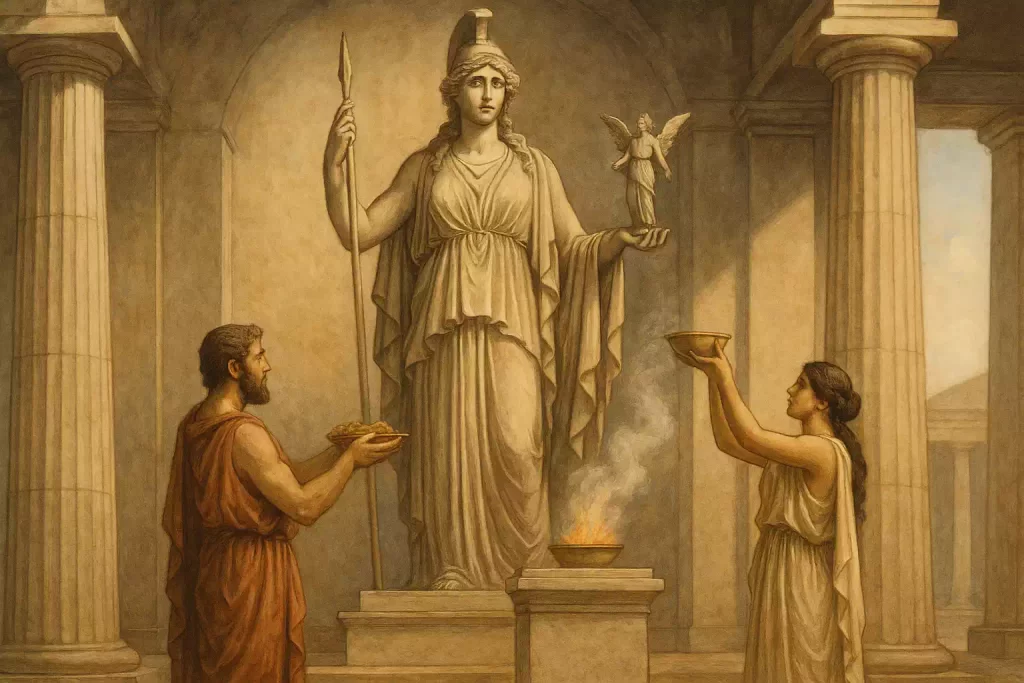
Worship took place in impressive temples like the Parthenon, serene mountain sanctuaries, and hillside groves. Greeks built these sites to honor specific gods, setting up altars for sacrifices or oracles like Pythia at Delphi to interpret the divine will. Pilgrimages to these places created strong communal ties, temples were not only spiritual centers, but also hubs of art, politics, and local identity.
Festivals and celebrations in honor of the Gods
The calendar included vivid public festivals, from the Olympic Games for Zeus to harvest feasts for Demeter. These gatherings blended ceremony, competition, arts, and socializing, strengthening bonds among citizens. Through shared celebrations, Greeks expressed gratitude, sought favor, and marked their cultural unity. Traditional processions, music, and dramatic performances turned these events into much-anticipated milestones throughout the year.
Rituals, sacrifices, and offerings to the Divine
Rituals involved more than prayer: participants made offerings, burned incense, and performed animal sacrifices to show devotion. Each detail mattered, from the purity of the sacrifice to the words spoken during the rite. Through these carefully orchestrated acts, Greeks sought both to honor their gods and secure ongoing protection and prosperity. Family, city, and personal well-being were all considered dependent on these proper displays of reverence.
The cultural impact of Ancient Greek Religion
Greek religion deeply influenced Western art, philosophy, ethics, and politics. Many ideals, like democracy, heroism, and justice, were intertwined with the deeds of gods and mythical heroes. The imagery seen in museums, rich with Greek motifs, demonstrates this heritage. To this day, modern language, theater, and literature echo the vibrant legacy first forged in ancient Greek sanctuaries and stories.
Answering common questions about Ancient Greek Religion
What did the Ancient Greeks believe?
Ancient Greeks believed in many gods who interacted with the world and shaped human destinies. They saw nature as alive with divine power and trusted in rituals to maintain harmony between the mortal and the immortal. This worldview emphasized community, honor, and respect for tradition.
Do Greeks worship Zeus?
Today, the vast majority of Greeks follow Orthodox Christianity. Worship of Zeus and the ancient pantheon ended as Christianity became dominant, though a small minority continue Hellenistic traditions for cultural and historical reasons. Nonetheless, Zeus remains a powerful symbol in Greek identity and mythology.
What are some key facts about Ancient Greek Religion?
Ancient Greek religion had no central scripture or organization, and each region practiced its own rites. Festivals, sacrifices, and temple worship were essential activities. Oracles like Pythia played a key role in decision-making for both individuals and city-states.
How did Ancient Greek Religion influence society?
Religion shaped politics, festivals, and daily routines, guiding ethical behavior and offering explanations for the mysteries of existence. Artistic achievements, such as sculpture and drama, often celebrated mythological themes. Community life was built around shared rituals and beliefs.
What was the afterlife belief in Ancient Greece?
Ancient Greeks imagined the afterlife as a journey to the underworld ruled by Hades, with souls experiencing various fates. While many feared a shadowy existence, heroes or especially virtuous people might reach the Elysium fields, a paradise of peace and reward. These concepts influenced later religious thinking in Europe.

ClassicWorldCoins was created by a passionate collector with a deep interest in ancient coins and their stories. Through this blog, he shares his discoveries, insights, and favorite pieces to help others explore the fascinating world of numismatics.